Category: Business

Pallet Freezer Spacers: The Role of Commercial Pallet Freezer Spacers in Enhancing Airflow and Reducing Freeze Times

In Australia’s climate-diverse and geographically vast landscape, the efficiency of cold chain logistics is critical to ensuring food safety, pharmaceutical integrity, and the freshness of perishable goods. As the demand for faster freezing times and more consistent temperature control increases, logistics providers and cold storage facilities are turning to innovative solutions to boost their performance. Among these, commercial pallet freezer spacers have emerged as a practical and highly effective tool for improving airflow and significantly reducing freeze times in industrial freezing environments.

The Cold Chain Challenge in Australia

commercial pallet freezer spacersAustralia’s cold chain logistics industry is responsible for transporting millions of tonnes of temperature-sensitive products annually—from frozen meat and seafood to vaccines and fresh produce. These goods often travel vast distances, encountering varying environmental conditions and strict regulatory controls.

Maintaining a consistent and efficient cold chain presents logistical challenges that impact both cost and product quality. Any fluctuation in temperature or delay in freezing can compromise product safety, leading to losses or regulatory violations. To meet rising consumer and export expectations, industry players must optimise every stage of the freezing and storage process.

The Science of Freezing Efficiency

Efficient freezing is not merely a function of temperature. Airflow plays a vital role in reducing the time it takes for goods to reach the desired core temperature. Traditional pallet stacking methods often restrict airflow between boxes, causing uneven freezing and extended freeze cycles. It not only increases energy consumption but can also result in temperature inconsistencies across pallets.

It is where commercial pallet freezer spacers make a substantial difference. These robust, reusable plastic inserts are placed between layers of stacked boxes on pallets. Their design allows cold air to flow more freely and evenly throughout the load, improving heat transfer and speeding up the freezing process.

Commercial Pallet Freezer Spacers: How They Work

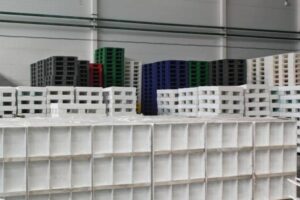
Commercial pallet freezer spacers are engineered with a grid-like or ribbed design that creates uniform gaps between product layers. This structure enhances vertical and horizontal airflow, ensuring cold air circulates efficiently between boxes on a pallet.

When placed between each layer, these spacers:

  • Reduce freeze times by up to 30% or more, depending on product type and freezer capacity.
  • Improve airflow consistency, eliminating hotspots and reducing the risk of partial freezing.
  • Lower energy consumption, as faster freeze cycles mean reduced freezer operation time.
  • Minimise spoilage by ensuring uniform product temperatures.
  • Enhance stacking stability, reducing the risk of pallet collapse during handling.

Their durability and reusability also contribute to sustainability goals, as they can be used for hundreds of cycles with proper cleaning and maintenance.

Applications Across Key Australian Industries

The benefits of commercial pallet freezer spacers are being recognised across various sectors of the Australian economy:

Food Processing and Export

Australia is a major exporter of beef, lamb, poultry, and seafood. Maintaining strict cold chain standards is vital to meeting international food safety regulations. Freezer spacers ensure quicker and more consistent freezing, improving shelf life and product quality upon arrival in overseas markets.

Pharmaceutical and Vaccine Logistics

Temperature-sensitive pharmaceuticals, including vaccines, require precise cold storage. Freezer spacers help maintain uniform temperature profiles, reducing the risk of compromised efficacy due to uneven freezing.

Fresh Produce and Dairy

Although not always frozen, some fresh produce and dairy products require rapid chilling to maintain freshness during transport. Spacers adapted for cold (non-freezing) storage can also improve airflow in chilled environments, reducing cooling times.

Economic and Operational Advantages

Beyond the technical improvements, commercial pallet freezer spacers offer clear economic and operational benefits:

  • Reduced labour costs: Faster freezing means quicker turnover in blast freezers, improving throughput and reducing bottlenecks in production or packaging lines.
  • Improved freezer utilisation: Companies can process more pallets in less time, maximising the return on expensive cold storage infrastructure.
  • Compliance and quality assurance: With consistent product temperatures, businesses face fewer rejections or recalls, enhancing their reputation and reliability in both domestic and export markets.

Conclusion:

Cold chain optimisation is no longer optional—it’s essential. In a country as expansive and export-driven as Australia, the efficiency of freezing processes can make or break supply chain performance. Commercial pallet freezer spacers represent an innovative, scalable solution for improving airflow, reducing energy use, and protecting product quality across diverse industries. As the cold chain sector evolves, these spacers will continue to play a pivotal role in driving operational excellence and sustainability.

Custom Packaging NZ: How Custom Packaging in New Zealand is Shaping Eco-Conscious Brand Identity

In today’s competitive marketplace, sustainability is no longer a secondary consideration—it’s a defining element of brand identity. Nowhere is this shift more evident than in New Zealand, where brands are embracing custom packaging as a key tool for expressing their environmental values. With a strong cultural emphasis on kaitiakitanga (guardianship of the environment), Kiwi businesses are aligning their packaging strategies with eco-conscious values, proving that sustainability and style can go hand in hand.

Custom packaging in New Zealand is evolving beyond aesthetics. It is becoming a medium through which brands tell their sustainability story, influence consumer behaviour, and meet rising expectations around environmental responsibility.

Eco-Conscious Consumers Are Driving the Change

custom packagingToday’s consumers—particularly in New Zealand—are more informed and more intentional with their buying decisions than ever before. A 2023 survey by Colmar Brunton revealed that over 70% of Kiwi shoppers actively prefer products with environmentally friendly packaging. It presents both a challenge and an opportunity for brands.
Custom packaging allows businesses to align their brand with these values from the first point of contact. By choosing materials such as recycled cardboard, compostable inks, and biodegradable films, New Zealand brands are reducing waste while demonstrating their commitment to sustainability. However, it doesn’t stop at materials—consumers also consider design elements, carbon footprint, and the potential for packaging reuse.

Custom Packaging as a Strategic Branding Tool

Gone are the days when packaging was simply a functional necessity. In the era of brand storytelling, custom packaging plays a central role in communicating a company’s identity. For eco-conscious brands in New Zealand, this means designing packaging that reflects their commitment to protecting the environment without compromising on quality or appearance.

Whether it’s a boutique skincare company using minimalist kraft paper boxes with soy-based inks, or a craft food brand opting for compostable sleeves and QR codes linking to sustainability reports, custom packaging provides an opportunity for brands to differentiate themselves. It signals thoughtfulness, authenticity, and innovation—traits that resonate deeply with modern consumers.

Sustainable Materials Powering the Movement

New Zealand-based packaging suppliers are innovating rapidly to meet demand for sustainable options. Common materials now include:

  • Recycled cardboard and paper: Fully recyclable and often made from post-consumer waste.
  • Plant-based plastics: Bioplastics made from cornstarch or sugarcane that break down under industrial composting conditions.
  • Compostable films: Ideal for food packaging, these materials decompose naturally without leaving toxic residue.
  • Water-based or soy-based inks: A cleaner alternative to petroleum-based inks, supporting better recyclability.

These materials form the foundation of custom packaging solutions that are both functional and environmentally responsible. New Zealand businesses are increasingly turning to local suppliers who offer transparency in sourcing and production, helping them maintain control over their environmental impact.

From Packaging Waste to Circular Economy

One of the key advantages of custom packaging is that it can be designed with the entire product lifecycle in mind. As New Zealand moves toward a circular economy model, businesses are under pressure to create packaging that doesn’t just end up in landfill.

Leading brands are now designing their custom packaging with reuse and recyclability at the core. Some are experimenting with modular or collapsible boxes for easy reuse, while others are integrating take-back schemes or incentivised recycling programs. This shift encourages consumers to become active participants in the sustainability process, fostering stronger brand loyalty.

Moreover, by investing in packaging that supports a circular model, New Zealand brands can often reduce long-term costs and gain a competitive edge in environmentally conscious export markets.

The Role of Digital and Minimalist Design

In sustainable custom packaging, design isn’t just about visual appeal—it’s about intentionality. Minimalist aesthetics are on the rise, not just for their clean look, but because they naturally reduce ink use, energy consumption, and waste. Digital printing methods, popular among New Zealand packaging providers, enable small runs, precise details, and minimal waste.

Custom packaging also offers smart digital integration.

Conclusion:

Custom packaging is no longer a luxury—it’s a necessity for brands that want to be taken seriously in today’s environmentally conscious market. In New Zealand, where respect for the land is deeply ingrained in the national ethos, businesses that embrace sustainable packaging are not just doing the right thing—they’re building stronger, more trustworthy, and future-ready brands.

Pallet Freezer Spacers: Lengths of Pallet Freezer Spacers for Food Processing

Freezer spacers are essential for blast freezing in food processing facilities, cold storage warehouses and other applications. They help improve airflow, reduce energy consumption, and protect product quality.

These plastic freezer spacers are reusable, food-safe and nestable to save floor space when not in use. Their rigid, high-density material can withstand temperature variances and ensures superior airflow. For more pallet freezer spacers lengths, click here.

Lengths

Pallet freezer spacers are essential for various food processing and handling applications. They can help speed up blast freezing times and improve refrigeration efficiencies to keep foods at optimal temperatures. They are also helpful for low-temperature cooling and tempering tasks. They work well in meat processing plants, cold storage facilities, frozen food warehouses and distribution centres, grocery wholesalers and food service operations.

pallet freezer spacersThese plastic freezer spacers have open lattice construction that supports stacked packages and prevents impressions on fresh products. They are easy to clean and made from food-grade material that withstands chill temperatures. Their durable design makes them a reliable choice for many types of food packaging, including cardboard boxes.

A pallet without freezer spacers could collapse on top of food stacks, causing them to become damaged or spill. These spacers stabilize stacked packages and reduce the risk of accidents in the workplace. They also save money by allowing air to circulate more freely, which speeds up the freezing process.

Weight

The lightweight design of these plastic freezer spacers makes them easy to handle, clean and sanitize. They also take up minimal freezer space when stacked together. These features make them cost-effective compared to metal pallets. They are constructed from food-safe HDPE material that withstands high temperatures and resists chemicals. For more pallet freezer spacers lengths, click here.

These freezer spacers are designed to fit on top of a standard pallet and can be stacked on each other. They have an open lattice design to allow air to flow through them, which helps speed up the freezing process. They can reduce the time needed for blast freezing by up to 30%.

These plastic freezer spacers are an excellent option for any frozen food warehouse. They can help keep the food at a specific temperature, which is essential in some industries, such as dairy production. They can also prevent the food from becoming contaminated and reduce the risk of foodborne illness.

Material

Designed to be durable and cost-effective, these freezer spacers are made from food-grade High-Density Polyethylene. They can withstand temperatures up to -50oC and are easily cleaned. They also resist chemicals and acids, ensuring they can be used repeatedly and safely in various working environments. They are also easy to handle and take up minimal freezer space, nesting efficiently into each other when not in use.

The open lattice construction of these freezer spacers allows them to support stacked layers during freezing without interfering with the cooling process. They also provide space for the cold air to circulate freely, improving the cooling effect. These spacers are often color-striped, allowing workers to identify and track them quickly. This makes them an excellent choice for food production facilities.

Application

Plastic freezer spacers allow air to circulate easily between stacked layers, speeding up blast-freezing operations and other low-temperature cooling and tempering tasks. They also help stabilize stacked loads and prevent food products from shifting as they freeze, improving the quality of end products. For more pallet freezer spacers lengths, click here.

Unlike solid pallets, these heavy-duty plastic sheets are unlikely to harbour contaminants and are easy to clean and disinfect. This helps minimize the spread of germs in production facilities and from employees to customers, helping maintain sanitary conditions.

Egg crate spacers are vital in achieving uniform temperatures and speeds when loading perishable foods for processing, storage or shipping. This helps ensure that the food will remain wholesome for its intended consumption by consumers and reduces the time the product spends in “danger zone” temperature ranges, where harmful bacteria can multiply. These sanitary cold-storage materials suit meat processing plants, grocery wholesalers and frozen food warehouses.

How to Use Pallet Freezer Spacers Safely

They are introducing a new way to run a safer warehouse. Premier Handling Solutions brings freezer spacers – heavy-duty plastic sheets that create space between layers of food on a pallet.

Their egg crate design increases airflow to transport heat and promote evenly chilled or frozen products.

Acoustic Guitar: Time-Tested Acoustic Guitar

Participants rated each guitar pair on overall sound and playability using the ABX test. The CIs for these ratings were relatively narrow, suggesting that guitarists could distinguish the guitar pairs moderately reliably.

ABX data also revealed that all guitars have three strong low-frequency modal properties (resynthesized bridge admittances). For more time tested acoustic guitar, click here.

Sound

The time, skill, and extra effort into this guitar translate into a beautiful tone. Whether you’re playing finger-picked chords or single-note improvisations, it weights to sound full on the lower strings and blends well with the upper lines for harmony and the clarity to cut through even dense mixes without losing its character.
Acoustic guitars are not a point source, so it can be easy to get an unbalanced recording by close-micing a specific instrument area. Moving back a little will help balance the resonant colourations from different instrument parts. Still, you may then sacrifice some of the appealing (though unnatural) immediacy imparted by the strings’ sound.

The mic position and polar pattern can also significantly influence the guitar’s sound, especially in less euphonic spaces. Small rooms like the kind to which many home recordists are relegated can exhibit significant changes in the frequency response that gets picked up at the mic if you choose a microphone with a directional polar pattern and move it a few inches either way from the guitar.

Construction

It can take on a more mature, complex tone as a guitar age. This results from the natural aging process and a combination of things like the environment in which it is played, the playing style, and even how much pressure is applied to the strings. For more time tested acoustic guitar, click here.

The way I build my guitars takes this into account by doing a lot of ‘tweaking’ of the tops, acoustic bracing, and other parts to consider the variations. This prevents the kind of ‘jigging up’ that makes it challenging to produce outstanding guitars with consistent quality.

It is challenging to do a proper experimental analysis of sound on a guitar because it’s almost always impossible to construct a control instrument that is precisely the same as the subject in every respect, including the variable under study. Furthermore, a guitar’s subjective loudness may differ significantly from a given decibel reading, depending on how it is positioned in the listening environment.

Materials

We used two identical guitars for this experiment – one with a solid body of ash wood and the other with walnut. The directional mechanical stiffness and acoustic damping of the guitar bodies were measured with Short-Time Fourier Transformation (STFT), and the vibration modes of the open strings were analyzed.

The results confirmed that the modal frequencies of the strings interact with the mechanical damping of the guitar and significantly influence its sound quality. For the lower vibration modes of the lines, a characteristic difference was observed between the guitars based on different wooden materials.

In the qualitative observational part of the experiment, participants were asked to play a series of chords on the guitar. The time needed to perform each chord was recorded. It was shown that individuals with prior experience playing musical instruments could perform the chords much faster than those without experience. This is because they are accustomed to the shapes and methods of playing an acoustic guitar, which enables them to follow a more intuitive approach. For more time tested acoustic guitar, click here.

Design

The sound of a guitar results from a complex interplay of four factors: the top, back, and bridge. The way they interact affects how loud and clear an instrument is. But finding the right combination of each requires lots of experimentation and a lot of listening.

For example, pointing a mic directly at the bridge can deliver bass overtones that are too strong and high-frequency content that’s too brittle. Putting the mic at the exact spot where the plectrum hits the strings can cause the guitar to give feedback in some environments.

Decker has also pioneered new ways to design acoustic guitars with unique body shapes that make them more versatile. One is the 00 acoustic body style, which delivers an even balance between bass and treble. It’s a fingerstyle guitarist’s dream and an excellent choice for live performance. It also has onboard Taylor Expression System 2 electronics for great tone and easy set-up.

Plant-Based Packaging Manufacturers

Plant-based packaging manufacturers offer products that are a sustainable alternative to plastic. These materials do not use fossil fuels and can be traced back to their source. They are also biodegradable.

Plant-based packaging can also help brands communicate their values to potential consumers. This is especially important for food companies that appeal to vegans, vegetarians, and flexitarians.

Jordisk

plant-based packaging manufacturersJordisk is a Norwegian startup that makes sustainable packaging using sugarcane. The company extracts polylactic acid (PLA) from the plant and produces food-grade and industrially compostable plastic bottles for various products. Their products are compliant with FDA, REACH, and Intertek standards. They can also have custom-designed products for a wide range of brands.

With growing consumer awareness, many companies are shifting to plant-based packaging. In addition to being environmentally friendly, these products can potentially improve product quality and shelf life. This trend has prompted startups to develop unique packaging solutions using natural materials. Many of these new materials are eco-friendly and offer an attractive aesthetic for the packaging.

Moreover, these products can be made from biodegradable or non-biodegradable materials. They can be used for various applications and are available in different sizes, shapes, and finishes. Some are even home-compostable and an excellent alternative to traditional plastics. Choosing suitable materials is vital to ensure that your product has the lowest environmental impact during its lifetime.

Another critical aspect of sustainable packaging is its durability. It must resist environmental stress, including heat, cold, and pressure. In addition, it must withstand the rigours of shipping and handling. These factors can be challenging to achieve with traditional packaging materials. But with plant-based packaging, these issues are easy to overcome.

Some of the best plant-based packaging manufacturers are located in the United States. They use state-of-the-art machinery and employ highly skilled professionals. They also use innovative techniques to improve production efficiency. They strive to make their operations carbon-neutral and are committed to reducing waste. Moreover, they are constantly working to innovate their processes to provide the best possible service to their customers.

As a result, their products are environmentally friendly and have the most negligible impact on the environment compared to other types of packaging. Using these methods is also an effective way to reduce the cost of your packaging, which is crucial for businesses that want to compete in the global marketplace.

Biorgani

The growth of e-commerce has led to an increase in demand for sustainable packaging solutions. Many startups are developing biodegradable plant-based polymers as a substitute for plastic packaging. These polymers have better environmental properties than plastics and are biodegradable in water and soil. They can also be recycled and have a lower carbon footprint than conventional plastics. The majority of packaging materials are made of plastics, which have a severe impact on the environment. These startups offer sustainable alternatives to these plastics, helping companies and brands reduce their environmental footprint.

Startups are using a variety of natural materials to develop eco-friendly packaging products. Some of these startups are experimenting with different types of plants, while others are creating products from recycled and compostable materials. For example, Xampla has developed a soluble film that can be an alternative to single-use plastic wrap. This product is made from a combination of natural ingredients cultivated to be food-safe and odourless. It is an ideal substitute for conventional plastic packaging.

Another company, Apeel Science, has patented a coating material that can be sprayed on fruit and vegetables. This product contains molecules that can interact with the molecules of fruits and vegetables to slow their spoilage. It can double the shelf life of produce, even without refrigeration. It is also non-toxic and non-porous, preventing cross-contamination between different products.

Bionicure provides a complete line of bio-based plastics for the food and beverage industry. Its bioplastics are derived from algae and can be used in place of PET or HDPE bottles. Their biodegradable plastics are also compostable, which makes them a greener option than conventional plastics. Moreover, their bioplastics are designed to meet the performance standards of plastic bottles.

Biorgani formulates and tests high-quality, cost-competitive biopolymers to help companies avoid traditional plastics. Its resins are food-safe, meet international certifications, and are compatible with conventional plastic machinery for film extrusion, injection, and thermoformed applications.

Biorgani was included in CB Insights’ Expert Collection for Advanced Materials. The Expert Collection is a series of analyst-curated lists highlighting innovative technology vendors with the potential to transform their industries. These lists are plant-based packaging manufacturers on our proprietary research methodology, which analyzes millions of data points and thousands of conversations across the tech industry. These lists can help tech buyers shortlist vendors and drive proposal requests (RFPs).